

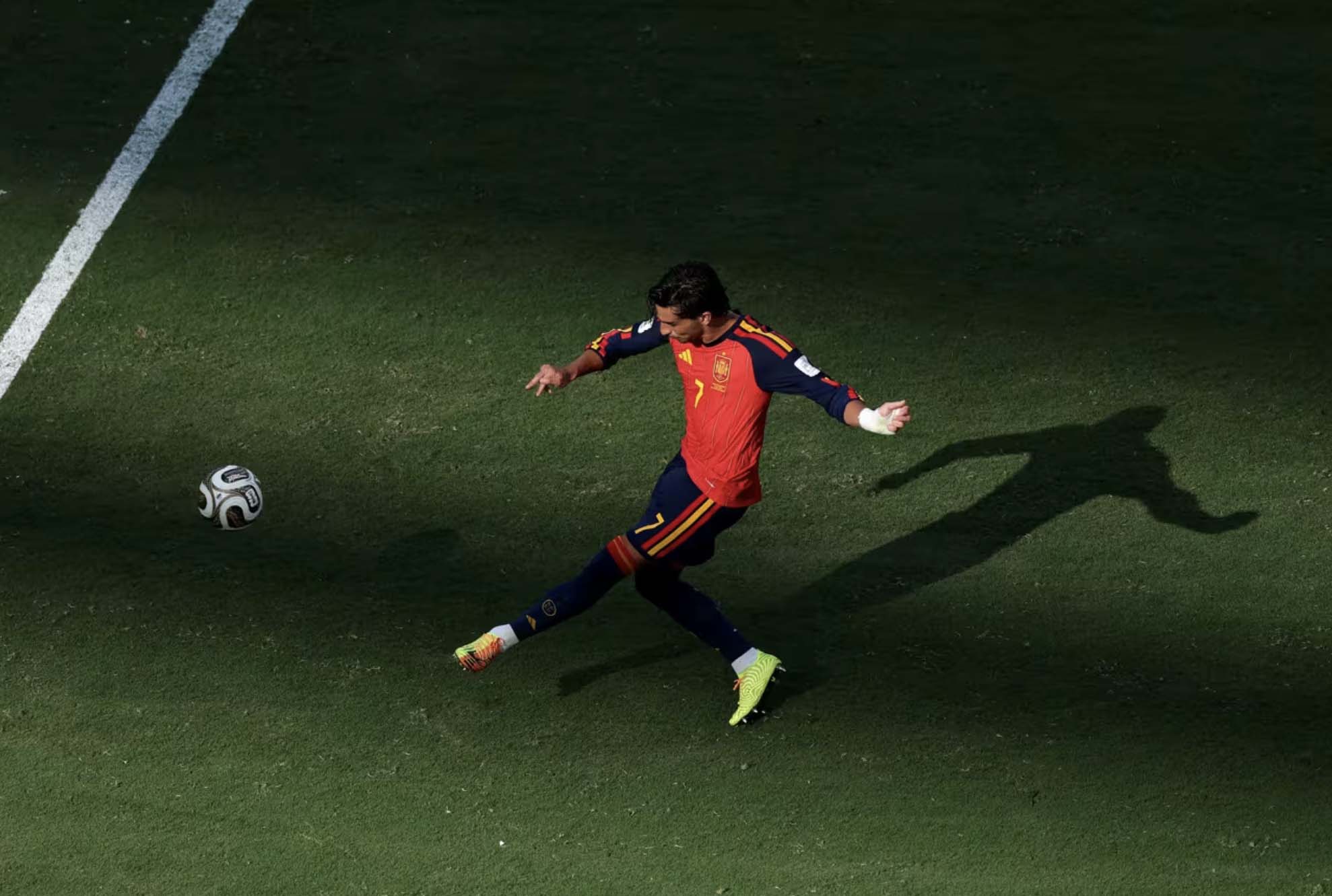
Ferran Torres of Spain scores the only goal during the FIFA World Cup Final. ©FIFA
By PETERSON GONZAGA
Front Row Features
LOS ANGELES,CA-The 2026 FIFA World Cup concluded on July 19, with Spain defeating Argentina 1–0 after extra time in the final at New York New Jersey Stadium to claim its second men’s World Cup title. The tournament was the first to feature 48 teams, the first to be co-hosted by the United States, Canada, and Mexico, and expanded to a record 104 matches. (AP News)
Spain’s title run was built on disciplined defending and timely goals. After eliminating Belgium and France in the knockout rounds, Spain edged Argentina in a tense final. England defeated France 6–4 in an entertaining third-place playoff.
The expanded format produced several surprise stories. Nations such as Cape Verde, Morocco, Norway, and Colombia exceeded expectations, while traditional powers including Brazil, Portugal, and the United States were eliminated before the semifinals. The larger field was widely praised for giving more countries a chance to compete, although some critics felt the longer schedule diluted the tournament’s intensity.
Off the field, the tournament generated significant debate. FIFA’s use of enhanced technology, refereeing decisions, and new entertainment elements—including longer hydration breaks and American-style presentation—divided opinion among fans and analysts. Political controversies and disciplinary decisions also attracted considerable attention throughout the competition.
Commercially, the World Cup proved to be a major success. Broadcasters reported strong audiences, and Comcast’s Peacock streaming service reached a record 48 million subscribers, attributing much of its growth to World Cup coverage.
Overall, the 2026 tournament will be remembered for:
- Spain winning its second FIFA World Cup.
- The successful debut of the 48-team format.
- Breakout performances from emerging football nations.
- Record fan engagement and television audiences.
- Ongoing debates over technology, commercialization, and the future direction of international football. (AP News)


