
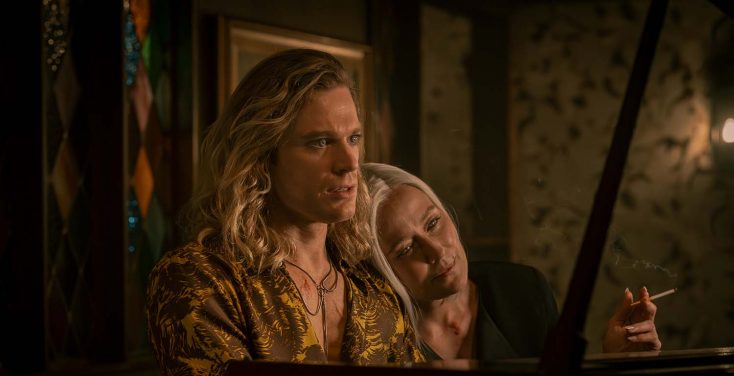
Sam Reid as Lestat De Lioncourt in ANNE RICE’S THE VAMPIRE LESTAT.- ©AMC Networks. CR: Sophie Giraud/AMC
BY JUDY SLOANE
Front Row Features
HOLLYWOOD-AMC’s third season of “Interview With the Vampire” is based on Anne Rice’s second novel in the franchise, hence the network is relaunching the series as “The Vampire Lestat”, which spotlight’s Lestat de Lioncourt’s (Sam Reid) emerging career as a rock star. As the band’s popularity increases, the character’s power over the vampires and humans alike becomes more intense.Members of the TV Critics Association spoke with Executive Producer Rolin Jones and Sam Reid, who portrays Lestat, about their intriguing new season which premieres on Sunday, June 7, 2026, at 9 p.m.
Q: The tone this season seems to be a lot lighter. I don’t know if it’s going to stay that way forever.
Rolin Jones: Nope.
Sam Reid: How much have you seen?
Q: The first two episodes.
Sam Reid: Okay. It gets pretty miserable.
Rolin Jones: You’re being seduced. It’s going to get about as dark as we’ve ever gone by the end of this.
I’m just going to say one last thing about it. It is structured around how Lestat wants to tell his story. And I think he comes in very confident thinking he can be glib and fun and keep it at bay. And as he gets deeper and deeper into recording, and things are coming up, it begins to change how the story is being told, how you’ll feel about it. It’s just a part of an emotional landscape.
Sam Reid: What Lestat wants is people to have a good time. He doesn’t want to engage in any trauma or porn or any capacity which he may have been interpreted in the past. That’s from the books. And I think Rolin and the team have done an amazing job of replicating that experience. When you first go from one book to the other, you get that very extreme whiplash, where you feel like you’ve gone into a much more irreverent playful space. But then, the darkness creeps in very slowly and takes over. And he can’t escape it, either. It’s like he’s constantly crawling out of the grave while it’s being shoveled full of dirt.
Q: Sam, there’s so many really clear 20th century antecedents and inspirations for Lestat’s onstage persona, like Jim Morrison or David Bowie. I’m really curious as to what you think Lestat’s opinion is about inspirations that go even further back to when he was human in the late 18th century and into the 19th. I was thinking particularly of Franz Liszt, but there’s plenty of others.
Sam Reid: For me, his onstage persona is built in that 18th century. It is the French iteration of the Commedia dell’Arte. And that’s where I place him as a performer. And then anything that goes beyond that is an extension of that character. Because I feel like that’s where he built his stage presence in his space. I did look at David Bowie, particularly at the “Cracked Actor” recordings of those live concerts (in1974,) but mostly to try and always remind myself that he’s not human, that he’s supernatural. You just got to make sure that you don’t forget that sometimes, because there is a lot more vulnerability in him this season than we’ve had before. I just wanted to make sure we maintain that he is kind of an other [worldly] thing, which I thought David Bowie just does extraordinarily.
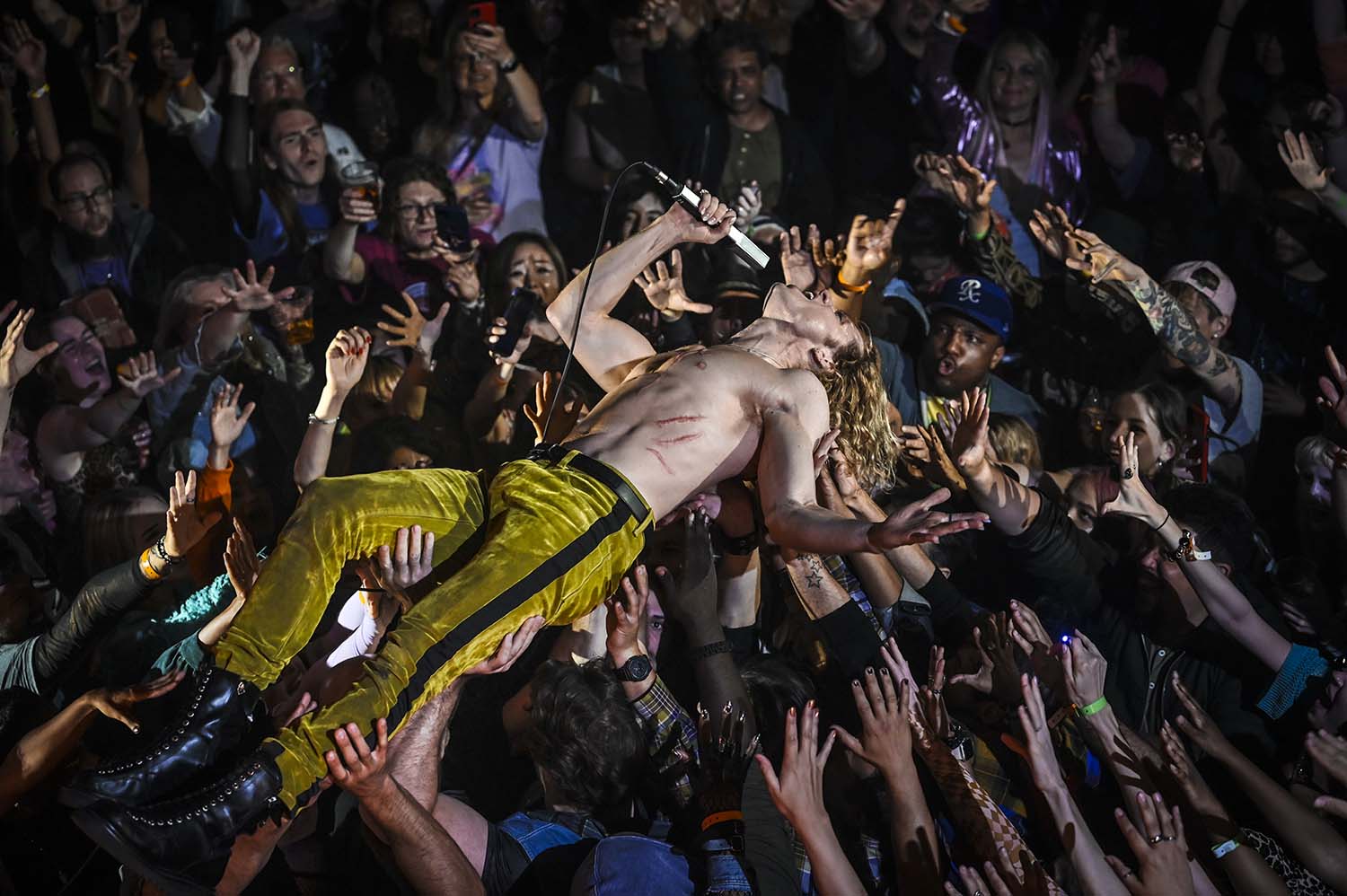
I think in terms of his stage presence, I wanted to make sure it felt still theatrical in a way. Because he’s still performing the idea of a rock star, at least at the beginning. As the show progresses, the performance starts to disappear, then I just really focus on the books and Rolin’s work and the songs that Daniel Hart wrote and hone in on that and pull the guy out of those things.
Rolin Jones: A classical reference, you nailed it on Liszt. We started [each] day in the writer’s room listening to Franz Liszt.
Q: Sam, what is the biggest difference in playing the vampire version of your character, as opposed to the human version?
Sam Reid: I always get this wrong, but there’s a quote from one of the books where [Anne Rice] does say, “We never really change over time. We just become more of what we really are.” The show does it and the books do it, where we explore who these people were as human beings. There is a lot of unanswered complexity. And then when you add on an immortal layer all of the humanity and the issues that surrounded their life, that drove their life to certain points are amplified. That’s their great challenge to unpick and resolve in some way, on top of dealing with being these superhuman creatures.
So, we’re really exploring human things, but we do have a framework of monsters which allows us to be much more extreme with our actions. When they have a fight, they’ll rip each other apart physically but then get back together again.


